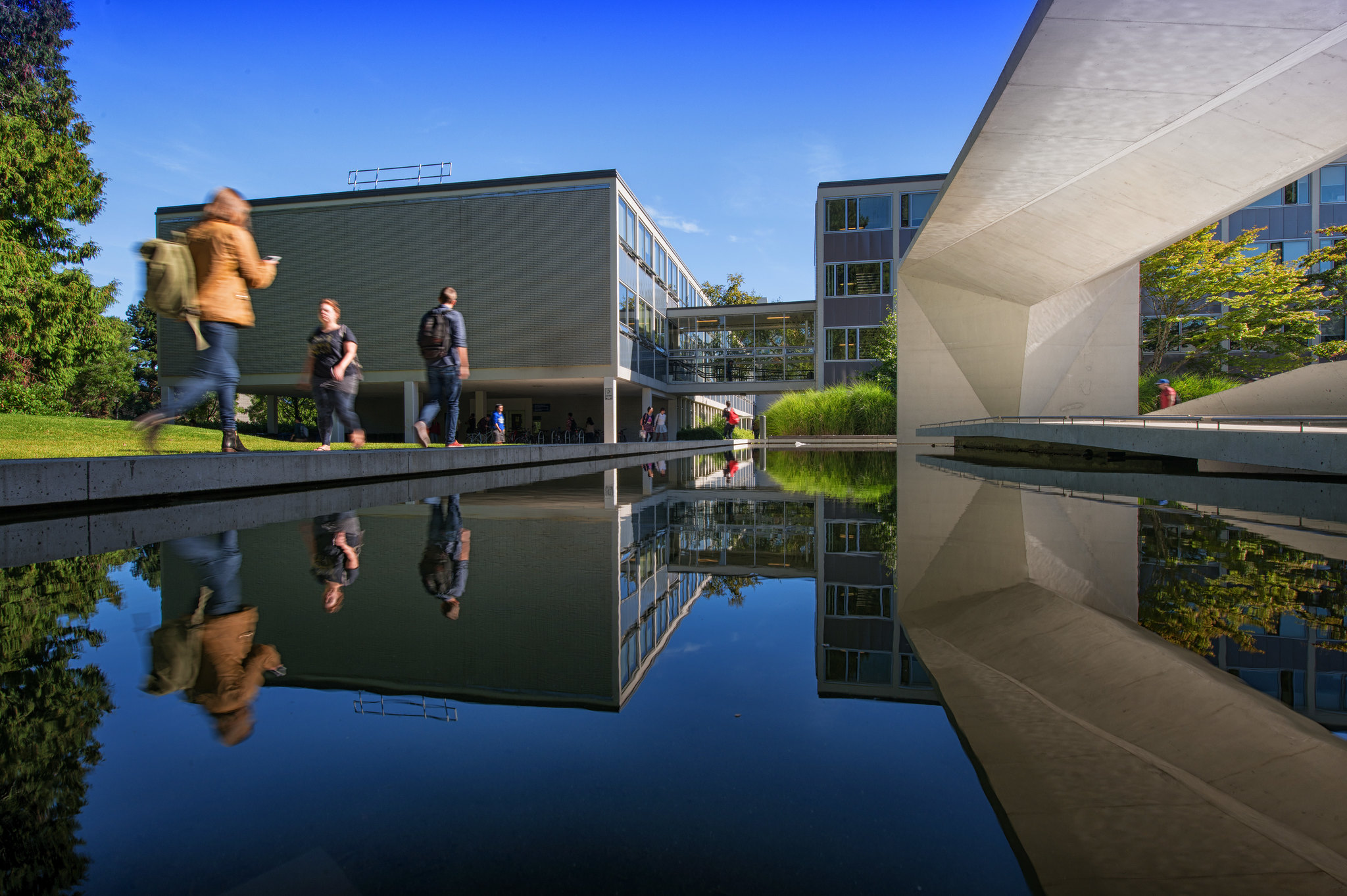
UBC’s School of Community and Regional Planning, nearing its 75th anniversary, is one of the larger Planning schools in North America and we’re a leader in education and research. We believe Planning is concerned with the well-being of communities, whether rural, metropolitan, or worldwide. We teach planners to undertake work in partnerships with communities and populations affected by the big decisions. This includes regard for Indigenous equity and dignity, and Indigenous ways of knowing, being, and doing. Our partnership with Musqueam Indian Band is unlike any Planning School in the world.
What you might expect/course format
While each course varies based on the subject and instructor, our VSP Packages feature:
- Field trips to key Vancouver locations
- Innovative learning activities in the field
- Distinguished guest speakers
- Hands-on multimedia labs
- Team-based assignments
- Experience with advanced industry software
- Fun activities
June 2026 Course Packages
Planning for Disasters and Resilient Communities
Every disaster is a tragedy, but also an opportunity to make communities more resilient to future risks. This course introduces students to the fundamentals of disasters, disaster risk reduction (DRR), and disaster resilience planning, emphasizing how cities can prepare for, withstand, and adapt to different types of disasters and crises. Drawing on real-world cases from Türkiye (Gaziantep and Antioch), Beirut (Lebanon), and Vancouver (Canada), the course examines how different disaster governance systems, institutions, and communities shape disaster preparedness and recovery. Students will learn (1) how to identify key factors influencing disaster risk, (2) how spatial tools and mapping can be used in disasters, and (3) how communities can prepare for disasters. The course includes field trips in Vancouver to disaster preparedness sites such as City Hall, the Fire Department, and a local volunteer group that established an Earthquake and Emergency Preparedness initiative to help their community plan for disasters. It will also feature guest speakers from Lebanon and Türkiye who will share their firsthand experiences with disaster response, innovative mapping practices, and community-led recovery efforts
Introduction to Urban Climate Adaptation
How can cities prepare for heatwaves, flooding, and wildfire smoke? This course explores how Vancouver is adapting to climate change and making the city safer and greener for everyone.
Students will learn how to (1) analyse spatial data to identify climate vulnerabilities, and (2) assess the strengths and weaknesses in existing urban climate actions. We will use GIS (Geographic Information Systems) tools like QGIS to make simple maps and analyze real data from Vancouver and combine that with hand-drawn maps and field observations collected during outdoor strata walks around the city. Students will visit examples of climate action in Vancouver, such as a cooling and clean air shelter, green stormwater infrastructure, and take part in an environmental stewardship activity like removing invasive plants or planting native species along a local creek.
Prerequisites: No prerequisites
Graduate (Master/PhD) Students: Not accepted
Minors (students aged under 19 at the start of the program): Not Accepted
A View from the Street – Analyzing the Arteries of our Cities
This course invites students to learn how to assess the qualities of urban streets and life between buildings by walking, biking, rolling, and taking public transit in the Vancouver metropolitan area. Streets are the connective tissue of cities, allowing people, goods, and utilities to move. But streets are more than just places of interaction between people; they are spaces that reflect culture, social values, and political power. Working in teams, students will review and analyze urban streets using mixed-method analytical tools. Experiencing the street from different types of mobility, students will use video, images, and sketching to analyze streets in person and by using online tools. Building students’ visual and written communication skills, our street explorations will include multiple mapping techniques, popularized by Jane Jacobs and William Whyte, for example. Meeting with local and international professionals, students will learn about the systems that make up good and bad urban streets and be able to critically assess the causes of positive and adverse conditions. By the end of this course, students will be able to meaningfully analyze, present, and discuss urban networks (and problems) with decision makers, professionals, and the public on issues concerning urban streets, including parking, active- and transit-network development, housing legislation, and more.
Street Transformations – (Re)Designing from Cars to People
The climate crisis has challenged cities to rethink the balance of mobility and place functions in urban streets, but they are often met with resistance related to the automobile. Building on multi-lens design and planning analysis practices, this course focuses on what sustainability means to urban development and the use of private single-occupancy cars in dense places. Our focus will be on the challenges and opportunities of street transformations toward more sustainable, equitable, and healthy forms. The process of change will be illuminated by lectures, discussions with planners, engineers, urban designers, and advocates, and hands-on design exercises. Using multiple lenses of analysis and media types, students will visit sites in Vancouver and the region that have implemented neighbourhood plazas, school play streets, street art, active transportation infrastructure design, traffic calming, street closure to cars, and many more. At the same time, we will also look at international examples of sustainable urban development like Barcelona’s Superblocks and New York City’s bikeways and plaza program. Throughout this course, in small groups, students will develop their own vision of urban street transformation, using multiple media types.
Prerequisites: No prerequisites
Graduate (Master/PhD) Students: Not accepted
Minors (students aged under 19 at the start of the program): Not Accepted
For more information
For VSP SCARP-specific questions, email info.scarp@ubc.ca.


Student testimonials
– Alessandra Nicole Baldovino, VSP SCARP student
– Alexandra Knoblaunch, VSP SCARP student