The Faculty of Education at the University of British Columbia, top-ranked in Canada and 9th in the world, has served the international education community through leadership in research, teaching, and service for over 50 years.

What you might expect/course format

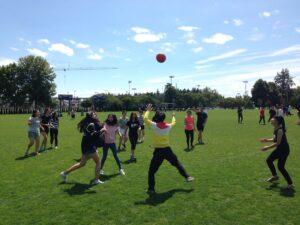
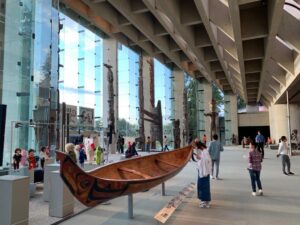
The UBC Vancouver Summer Program in the Faculty of Education is a four-week program developed for international undergraduate students. The courses deliver academic rigour through pedagogies selected to optimize learning of students with diverse cultural and linguistic backgrounds. The program provides the opportunity for students to learn about a wide range of education topics in a Canadian context, while also exploring Canadian society and culture through engaging classes, field trips, and social activities. It is a truly holistic learning experience!

  • Each package consists of two courses (approximately 39 hours of class time per course)
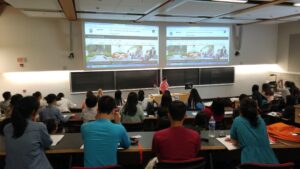
  • Classes are interactive and often include discussions, group work, and field trips
  • Evaluation may include assignments, group projects, papers, and presentations
  • Out-of-the-classroom activities extend learning opportunities and help build international networks of colleagues and friends
  • Students’ home universities can receive detailed information about the courses and records of students’ achievement and may grant academic credit for the courses at their own discretion

June 2026 Course Packages

Applied Linguistics for Teachers

An introduction to additional language learning and teaching, from the perspective of applied linguistics, this course will assist teachers of English as an additional language in making linguistically informed decisions about their practice. The course design is grounded in the understanding that today’s language classrooms are diverse multilingual and multicultural places, presenting students and teachers with unique challenges. Therefore, successful language teachers need to understand more than just the structure and nature of the language(s) they teach: they also need to develop an understanding of the social, cultural, and ideological implications of language and language education.

Introduction to Teaching and Learning English

By focusing on the practice of English language teaching, this course aims to provide participants with a comprehensive view of fundamentals that guide instructional practices in
a variety of contexts. This course design is grounded in the understanding that to be an
effective language teacher, one needs to familiarize with a range of instructional models,
teaching techniques, assessment strategies, and sociocultural concerns, as they pertain to
teaching English in the globalized world. Specifically, this course gives participants an insight
into innovative ways to promote communicative competence though integration of language
skills and will prepare them for lesson and unit planning. Topics to be discussed include:
overview of teaching methods, curriculum and planning for instruction, initiating and
sustaining interaction in the classroom, classroom management, among others.

Prerequisites: No prerequisites

Minors (students aged under 19 at the start of the program)Not Accepted

Supporting Responsive Young Child Growth in Early Childhood Settings

This course explores responsive ways to support the growth and learning of young children in early childhood settings. The focus is on positive relationships and responsive approaches that support learning and growth in young children. Elements and approaches that can transform early learning settings into highly effective programs that facilitate student success. Students will learn about, discuss, and clarify some of the theories, programs, and approaches central to culturally responsive approaches to early education, including child development theory, developmental neurosciences, strength-based approaches and the holistic and relational nature of learning in the early years. This course focuses on current issues around young children’s rights, socio-emotional development, preparing for school, second language acquisition, learn in nature, and engagement with caregivers. It highlights the idea that young children’s innate capacity to learn and educators’ responses to children’s inquiries provide the foundation for the growth and high-quality early learning experiences for young children.

Creating Positive Environments to Support Learning in Early Childhood Settings

In this course the students are introduced to the significant role that designing stimulating and nurturing early childhood learning environments plays in children’s learning and in supporting all aspects of their development and growth. Recognizing that early childhood education is constructed within historical, sociocultural, political, and theoretical contexts, in this course the ways in which high-quality learning environments engage with all of these contexts are explored. Additionally, it discusses the considerations that socio-cultural contexts and socio-emotional relationships have on creating learning spaces by taking into account philosophies of childhood, play, and learning through in-class experiences and visits to programs in the field.

Prerequisites: No prerequisites

Minors (students aged under 19 at the start of the program)Not Accepted

Writing Clearly: Writing for Academic and Professional Success

Writing clearly and persuasively is essential for success at university and in the workplace. In this course, students will gain confidence in their ability to construct powerful prose in order to make their arguments using different rhetorical strategies. Understanding the importance of tone, style and audience in academic writing, students will learn to organize and present ideas coherently in a range of academic formats. Educational outings on campus will give students the opportunity to interact with the UBC community, collect data and develop their research skills. Students will also learn the importance of academic integrity, how to correctly cite sources and explore how AI tools can support their writing in appropriate and ethical ways.

Speaking Clearly: Communicating with Clarity, Confidence and Purpose

This speaking skills course builds students’ ability to convey ideas articulately and effectively in spoken communications. Whether preparing for presentations, participating in academic discussions, or improving everyday communication, students will gain practical tools to express themselves with greater precision and confidence. Activities, including collaborative assignments and interaction with other international students studying at the English Language Institute, are grounded in the local environment and develop students’ proficiency in communicating in real-world contexts. Students will explore topics of interest, transform research into compelling presentations, and gain hands-on experience creating projects in UBC’s media facilities. They will also build confidence in speaking, refine pronunciation and non-verbal communication, convey a confident, engaging presence and participate in or lead panel discussions on local and global issues. By the end of the course, students will be ready to speak fluently and confidently in academic settings and beyond.

Prerequisites: No prerequisites

Minors (students aged under 19 at the start of the program)Not Accepted

For more information

For VSP Education-specific questions, email Fang Wang, Director of International Initiatives, at fang.wang@ubc.ca.
Student testimonials

“It has truly been a transformative learning experience for me. As a student teacher, I learned so many practical teaching skills and classroom management strategies here. These four weeks broadened my understanding of teaching and learning.”

– Liyan, VSP Education Student

“I truly enjoyed studying at UBC to learn about teaching and learning, and exploring Vancouver after class. The city itself is a large classroom to learn culture, history, different ways of being, and it all inspires me to reflect on how to be a better educator.”

– Pablo, VSP Education Student